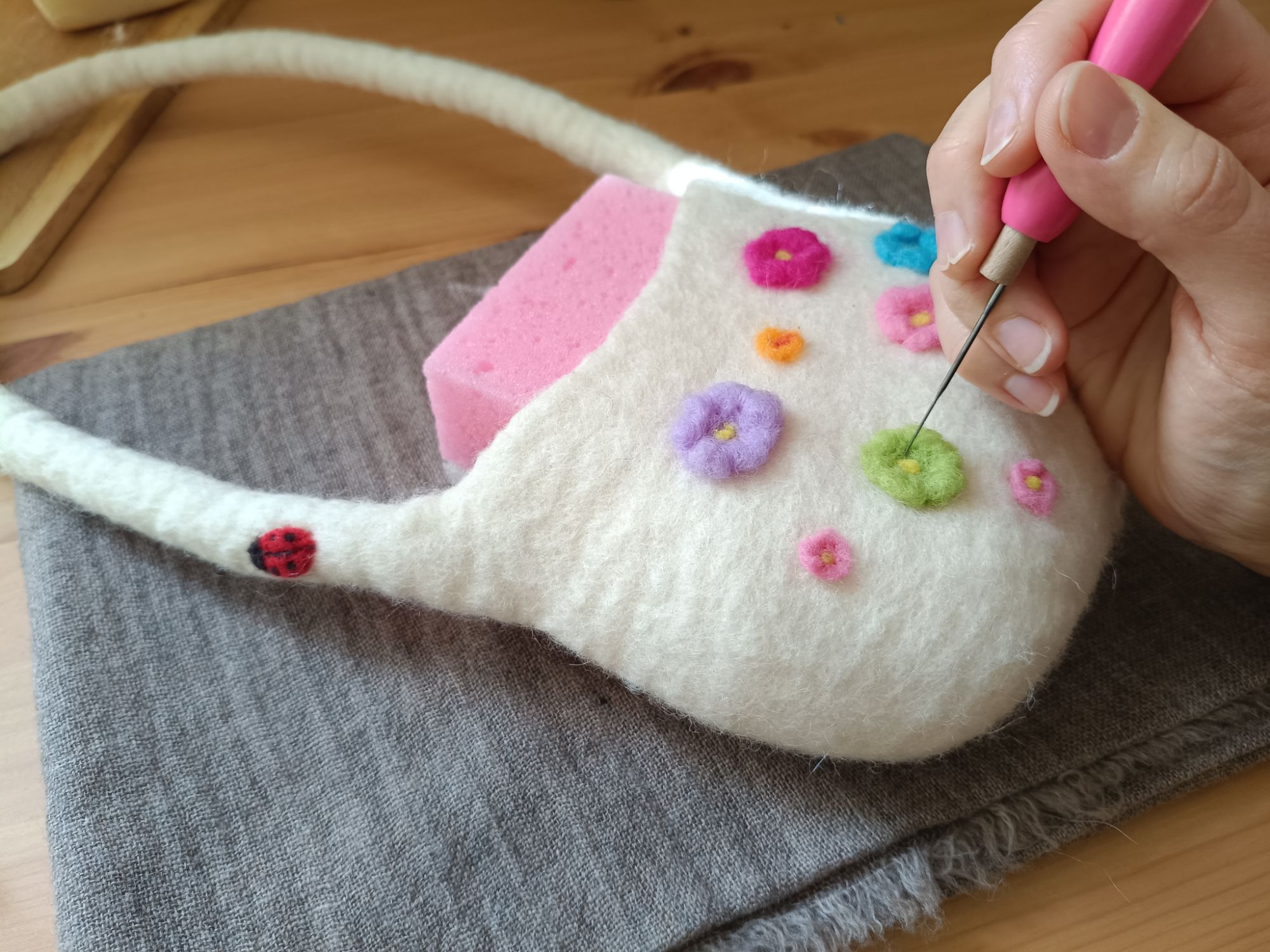
I have to say in advance that I am an almost self-taught felter, I have never had the occasion or the budget to join workshops or courses on wet felting and all I have learnt comes from the few free videos I have found online, the few tips and tricks that I have managed to gather and eventually A LOT of trial and error.
So I am not ashamed to admit that felting a bag has never come easy to me.
Particularly getting the strap (or handles) to actually join to the body of a bag during the wet felting process felt almost impossible.
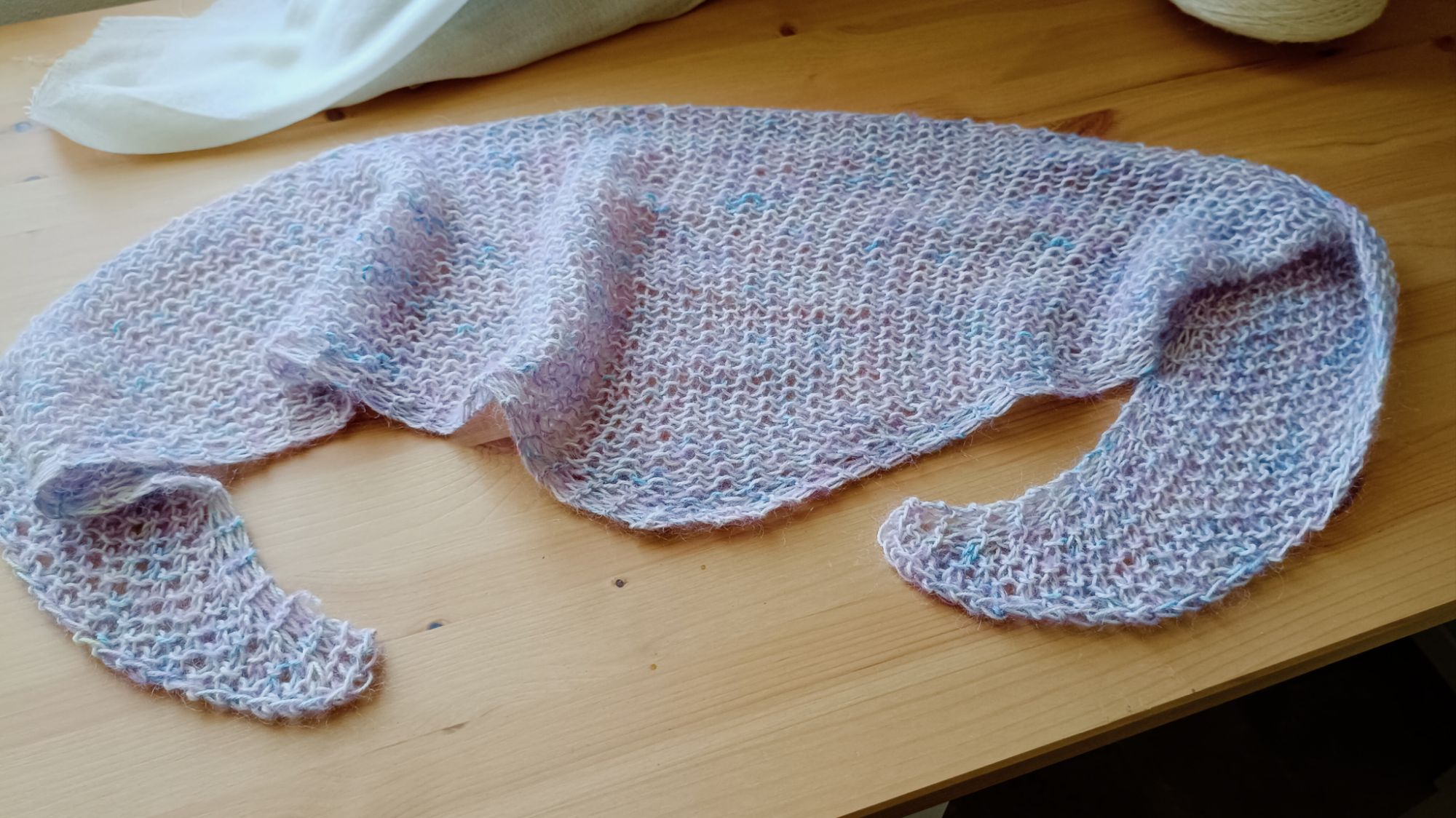
This triangle scarf is extremely easy to make, though it certainly wasn’t easy to create! This is my eighth attempt at this pattern… and I mean eighth!
What was so difficult?
It wasn’t the stitches. Trust me, you only need to know three: knit, purl, and increase. If you want to be fancy, you can use left- and right-leaning increases, but it won’t change much in this specific pattern. Because the needles are quite large compared to the yarn weight, the final effect is an open net that hides a lot of those fine details.
So, what was the complicated part? The increase rate and the edging.
I really wanted to include a “cool” edging, like an i-cord, because I’m not usually a fan of garter stitch edges. In the end, however, garter won. It’s stretchy enough to accommodate all the increases, which is vital since this scarf is knitted from the tip up.
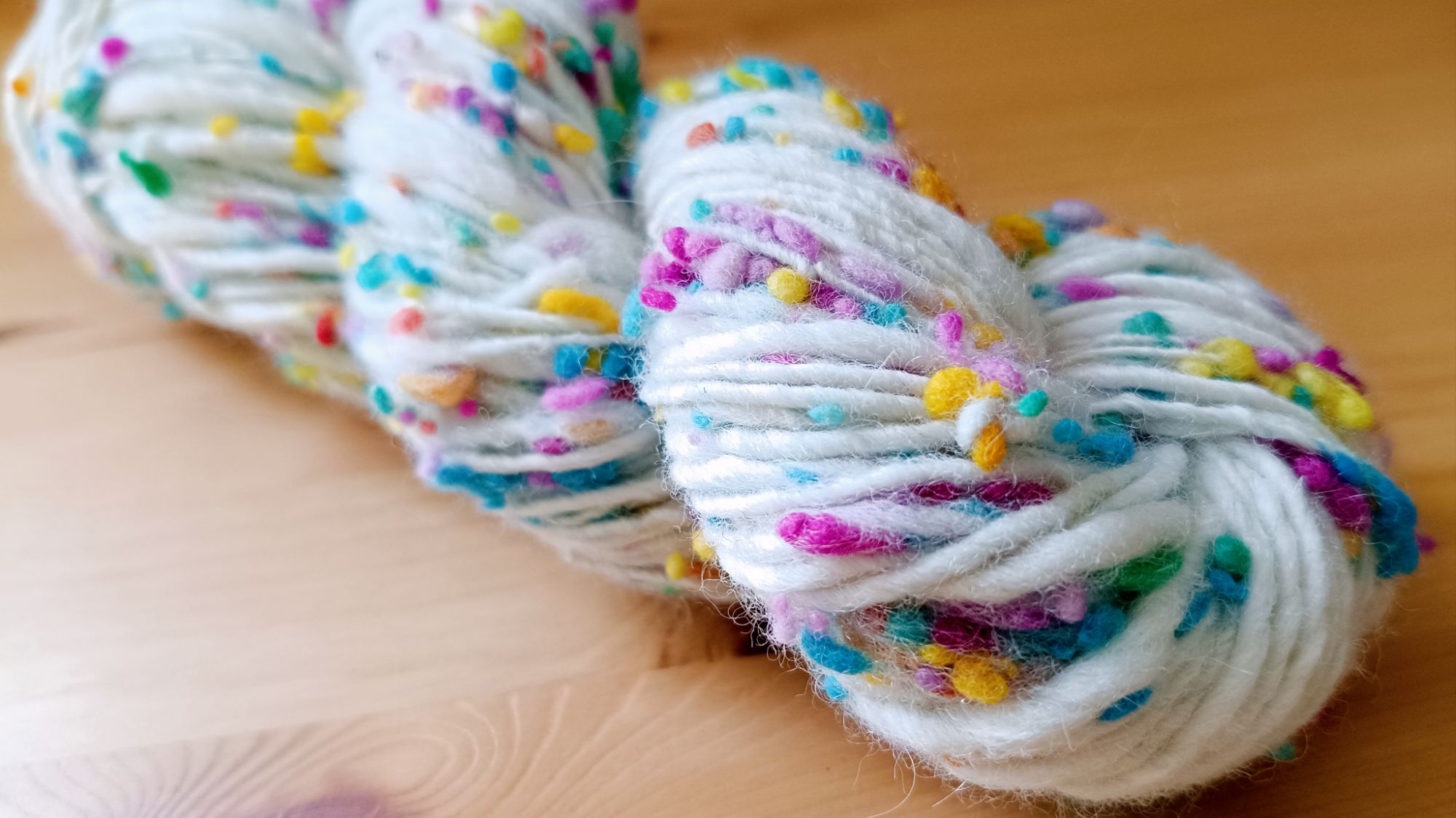
I’ve had this idea for a while: dyeing wool nepps that I bought years ago in a wide variety of colors, and then spinning white wool with these colorful nepps tucked inside.
And then it hit me: is this how tweed is made?! And the answer is… YES! So, it turns out I didn’t actually invent the process for making tweed… because it was already a thing. 😛
Oh well… I finally gave it a try! My main concern was: would the nepps actually stay inside the wool?